
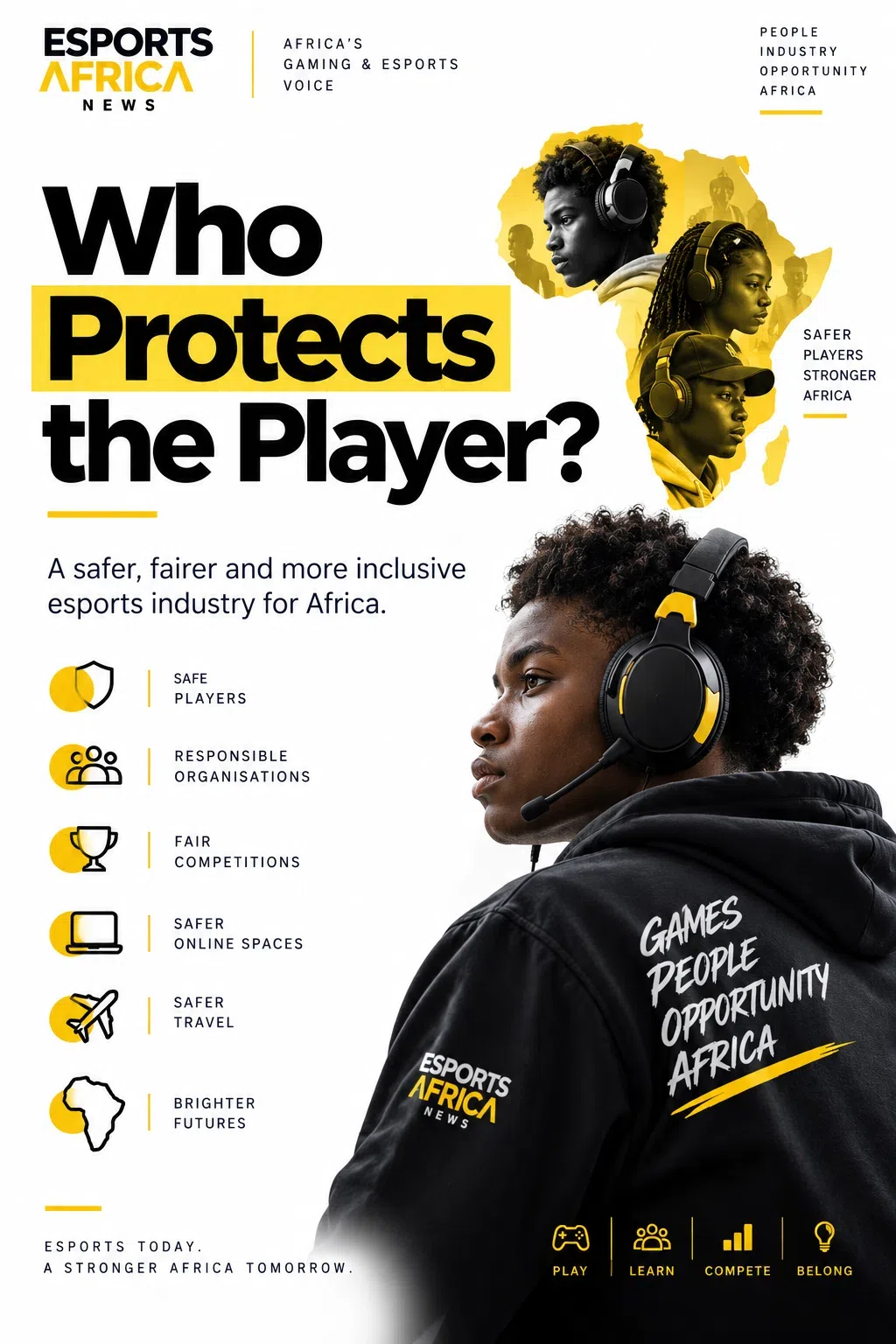
African esports is expanding fast, but the systems designed to protect players are not keeping pace with that growth.
Reports of harassment, intimidation, unpaid tournament prizes, poor competition management and online abuse have raised concerns about how players are protected across the continent. Individual allegations still require proper investigation, but the broader pattern highlights an important governance issue.
Young players face unique risks
Esports can move talented teenagers quickly from playing at home to joining teams, entering tournaments, signing contracts and travelling for competitions.
That creates new responsibilities for parents, coaches, tournament organisers, federations and sponsors, especially when minors are involved.
Risks extend beyond physical events
Player protection is not limited to venues and tournaments.
Competitors can also face bullying on Discord, threats through WhatsApp, harassment on social media and pressure through private messages without ever meeting the person involved.
Adult players also need protection
Safeguarding should not end when a player turns 18.
Adult competitors can face financial exploitation, discrimination, coercion, harassment and abuse of authority, particularly when challenging unpaid prize money or disciplinary decisions.
Independent complaint systems are essential
A major governance problem appears when the same organisation controls player selection, disciplinary decisions and complaints against its own officials.
Independent reporting and appeals systems could help players raise concerns without fearing exclusion from tournaments or national teams.
Esports organisations need clearer rules
The article argues that every recognised esports organisation, academy, team and tournament operator working with young people should have a published safeguarding policy.
That policy should clearly explain unacceptable behaviour, reporting procedures and who is responsible for investigating complaints.
Prize money must be transparent
Tournament organisers should also publish prize pools, eligibility requirements, competition rules and payment dates before players enter.
For events offering significant prize money, systems such as escrow could help ensure winners are actually paid on time.
A Player Bill of Rights could help
One proposed solution is an African esports Player Bill of Rights.
It could cover areas such as safety, discrimination, harassment, privacy, image rights, prize payments, disciplinary procedures and appeals.
For minors, additional rules around parental consent, travel, accommodation, emergency contacts and communication with adults would also be important.
Parents need better esports education
Parents are another key part of the safeguarding process.
Instead of simply banning gaming or allowing unrestricted access, families need better information about competitive gaming, online communities, private messaging, contracts, payments and warning signs of inappropriate behaviour.
African esports could develop its own safeguarding standard
A longer-term proposal is the creation of an African Gaming and Esports Safeguarding Standard.
Such a framework could establish minimum requirements for federations, teams, academies and tournament organisers covering child protection, online conduct, financial transparency, investigations and appeals.
Governance must grow with the industry
African esports is attracting larger prize pools, more international competition and increasing attention from sponsors and investors.
But sustainable growth will depend on whether the industry can build credible systems that protect the people at its centre.
The key question is no longer whether African esports needs stronger safeguards, but how quickly those protections can be implemented before larger problems emerge.