
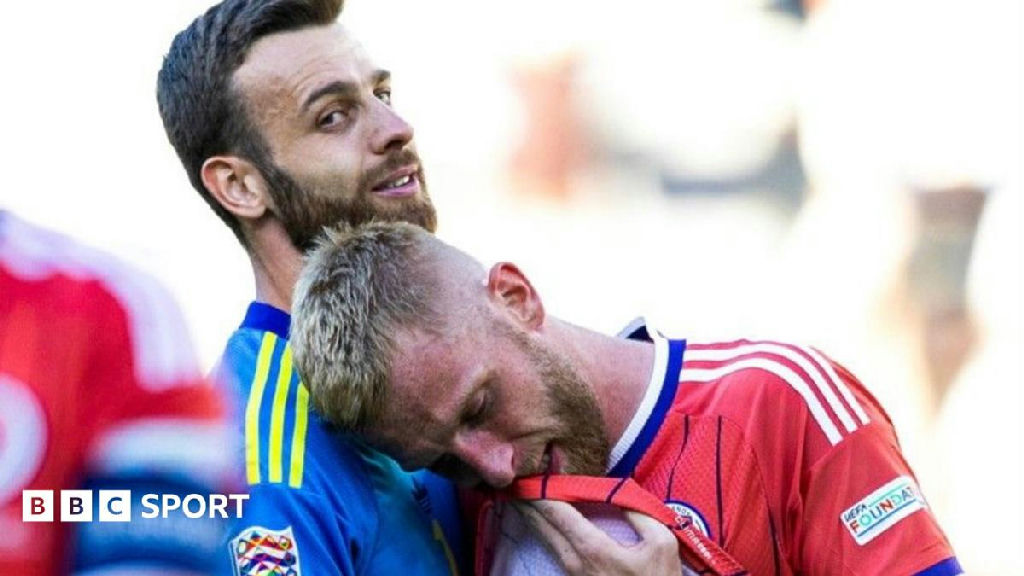
Scotland shows tactical resilience in goalless Nations League draw against Slovenia
The Sebastien Pocognoli era as Scotland head coach began with a hard-fought 0-0 draw against Slovenia in Ljubljana. Despite a disjointed opening period, a significant second-half tactical shift highlighted the potential of the new regime, though familiar struggles with clinical finishing prevented the Scots from securing all three points in their Nations League opener.
Billy Gilmour acts as the creative engine
Napoli midfielder Billy Gilmour proved to be the focal point of Scotland's resurgence after the interval. Having missed the previous World Cup campaign due to injury, Gilmour returned to the heart of the midfield alongside Lewis Ferguson. His impact was immediate and profound, as he transitioned from a deeper role to a more advanced creative position.
According to tactical analysis, Gilmour recorded 32 passes into the final third, more than any other player on the pitch. His ability to link play with the strikers created several high-quality opportunities. Former Scotland international John Collins described Gilmour as the "catalyst for everything," noting his tendency to follow passes into the box and challenge the Slovenian backline directly.
Pocognoli adjusted Gilmour’s positioning at half-time to combat Slovenia's structure. By dropping him slightly lower during the build-up, Scotland gained better control of the ball and became more compact defensively, making it difficult for the hosts to play through the lines.
Stephen Welsh delivers composed defensive debut
The match also marked a significant milestone for Stephen Welsh, who earned his first international cap. Playing on the left side of a back three despite being naturally right-footed, the Swansea City defender showed remarkable adaptability. While the Scottish defense appeared vulnerable to long balls in the first half, Welsh’s positioning improved drastically as the game progressed.
Data from the match shows that Welsh’s average position moved well into Slovenian territory during the second half. This aggressive stance allowed Scotland to sustain pressure and recycle possession more effectively. Welsh finished the game with 16 passes into the final third and the highest pass accuracy rating among his teammates, proving his value in Pocognoli's new system.
Clinical finishing remains a persistent challenge
Despite the tactical improvements, Scotland’s long-standing issue with goalscoring remains unresolved. The team has managed only one goal in their last four competitive fixtures, a statistic that loomed large in Ljubljana. Returning striker Oli McBurnie, making his first appearance since 2021, had two clear chances but was denied by the exceptional Jan Oblak.
Debutant Robbie Ure and substitute Kieron Bowie also found themselves in scoring positions. Bowie, currently with Sassuolo, registered the highest expected goals (xG) rating of 0.94 despite playing only 25 minutes. However, the clinical edge required at the international level was missing, as several close-range efforts failed to find the back of the net.
The result leaves Scotland with plenty of positives to build on as they navigate a busy international window. While the defensive structure and midfield creativity showed clear signs of evolution under Pocognoli, the search for a reliable "killer instinct" in front of goal continues to be the primary objective for the national side. For more detailed statistics and upcoming fixtures, fans can visit the official UEFA Nations League website.