
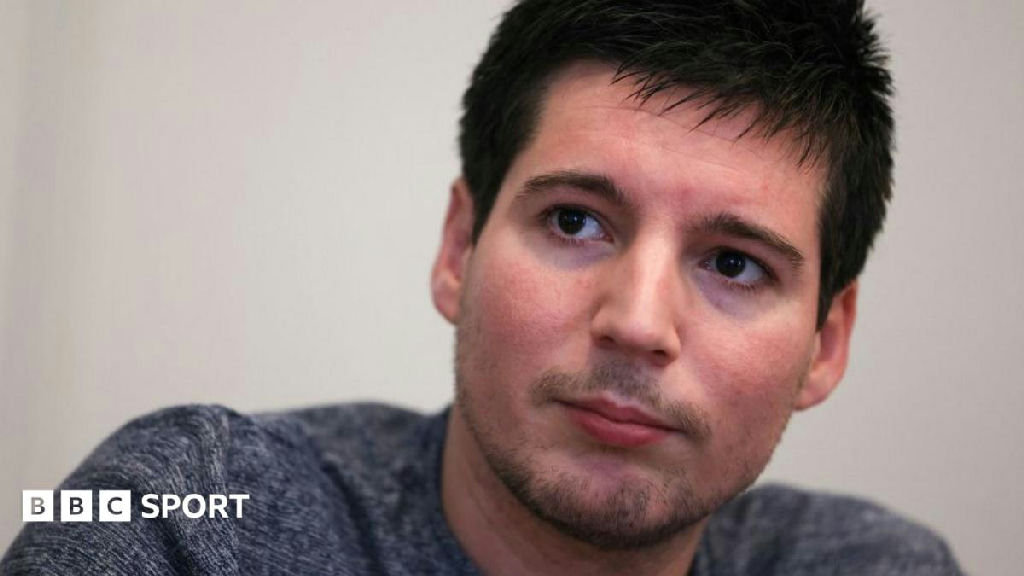
Rui Pinto and the digital crusade that brought Manchester City to court
Rui Pinto, the Portuguese computer hacker behind the Football Leaks website, remains a polarizing figure whose actions fundamentally altered the landscape of modern football. By exposing a massive cache of confidential documents, Pinto provided the catalyst for the Premier League's investigation into Manchester City, which recently resulted in the club being found guilty of numerous financial rule breaches. His work, which began as a clandestine operation, has since sparked a global conversation about transparency, ethics, and the influence of money in the world's most popular sport.
The origins of a digital revolutionary in Portugal
Growing up in Vila Nova de Gaia, just across the river from Porto, Pinto was described by his former teachers as a "perfectly normal" and sociable student. Despite his modest upbringing—his father worked in a shoe factory and his mother passed away when he was only 11—Pinto displayed an early and exceptional aptitude for technology. His former geography teacher, Mario Falcao, recalls a boy who was sociable but not extroverted, often spending his time at the gym or local restaurants with friends.
Pinto’s academic journey at Escola Secundaria Almeida Garrett was marked by his proficiency in computer science. While he was a supporter of FC Porto, his motivations for launching Football Leaks in 2015 seemed to transcend simple club loyalty. According to Falcao, Pinto may have been driven by a youthful "need for justice" and a desire to expose the hidden mechanisms of the industry he loved.
Football Leaks and the exposure of the beautiful game
When Football Leaks launched in September 2015, it sent shockwaves through the sports journalism world. Portuguese journalist Antonio Varela was the first to be contacted by Pinto, who then used the pseudonym "John." Varela recalls the immediate realization that the information being shared was of unprecedented importance, offering a look behind the curtain of professional football that had never been seen before.
The scale of the operation was staggering. Pinto eventually shared over three terabytes of data—equivalent to thousands of volumes of an encyclopedia—with the German magazine Der Spiegel and the European Investigative Collaborations consortium. This data included internal emails, sponsorship contracts, and payment details involving some of the biggest names in the sport, including Cristiano Ronaldo, Lionel Messi, and Neymar.
For data journalists like Christoph Winterbach, the leaks were a goldmine of information. The documents allowed reporters to cross-check negotiations and financial structures, ensuring the material was authentic before publication. Winterbach describes Pinto as a highly intelligent and idealistic character who became one of the most significant whistleblowers in European history.
A polarizing figure between justice and criminality
The perception of Rui Pinto remains deeply divided. To his supporters, such as former MEP Ana Gomes, he is a hero who should be protected under whistleblower laws. Gomes argues that Pinto’s revelations have assisted judicial authorities across Europe in tackling corruption and financial crime. She maintains that if organizations like Manchester City have nothing to hide, the hacking of their internal communications should not be their primary concern.
Conversely, many view Pinto as a common criminal who obtained information through illegal means. Retired journalist Jose Carlos Freitas notes that a significant portion of the public sees him as a "thief" rather than a "Robin Hood." This ethical dilemma—whether the public interest justifies the illegal acquisition of data—lies at the heart of the legal battles Pinto has faced since his arrest in 2019.
Regardless of his reputation, the impact of his actions is undeniable. The documents he leaked led directly to the 115 charges brought against Manchester City by the Premier League. With the club recently found guilty of the majority of those counts, the legacy of the 37-year-old hacker from Portugal continues to reshape the future of football governance. For more context on the investigative work behind these revelations, readers can explore the extensive reporting by Der Spiegel.